IKEA AI Home Furnishing
Designing an AI-native experience that translates inspiration into a fully furnished, shoppable version of a user's real space.
Industry
Home Furnishing · E-commerce · AI-driven Experiences
What I did
Led concept and interaction design for this AI-native furnishing experience with IKEA's AI Lab, reframing an early "spot furniture in a photo" idea into generating a full, shoppable room from a photo and inspiration. Designed the flow, waiting states, and refinement controls around real AI constraints - latency, imperfect matches, regeneration cost. Then took it past the design file: ==built the entire front-end web experience myself==, production code rather than a prototype, reviewed and approved by engineering and shipped live.
Tools used
Figma · React · GitHub Copilot · Internal AI Systems
Year
2026
Overview
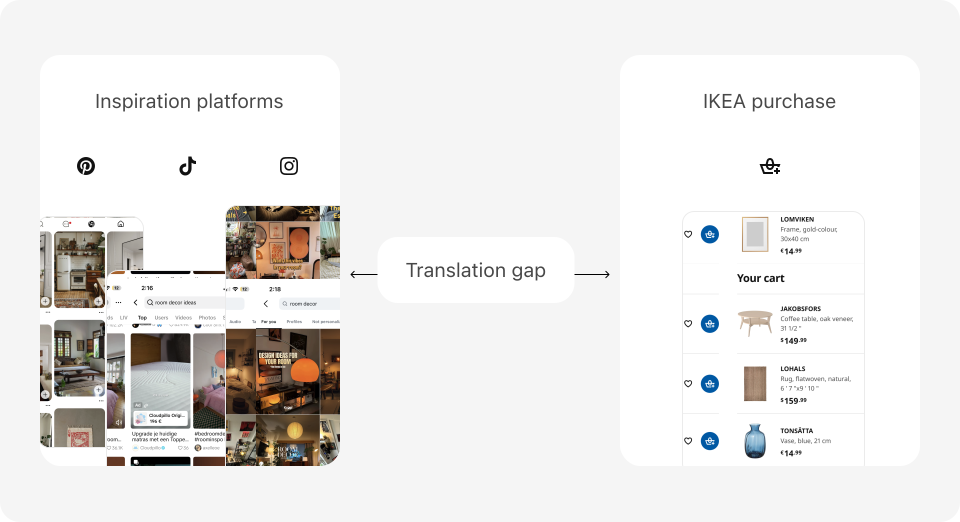
IKEA's digital experience is highly optimized for transactions, but falls short in the early stages of the journey-where users seek inspiration and guidance for their own spaces. As a result, customers often turn to external platforms to imagine their homes, and only return to IKEA when they are ready to buy.
This project explores how AI can reposition IKEA as a design partner, not just a retailer-by translating inspiration into something personal, actionable, and immediately shoppable.
Framing the Opportunity
Home furnishing increasingly starts outside the retail journey. People collect inspiration from Pinterest, Instagram, and saved images, but still struggle to translate what they like into something that works in their own home.
IKEA's digital experience is strong at browsing and buying, but less present in the earlier, more uncertain stage of the journey: imagining possibilities, making decisions, and building confidence. This creates an opportunity to move IKEA from a transactional endpoint to a more active design partner.
With AI, the experience can shift from asking users to manually search, filter, and assemble a room, to generating a complete proposal from two simple inputs: a photo of their room and a source of inspiration.
How might we translate inspiration into a fully furnished version of a user's own room - in a way that feels immediate, intuitive, and actionable?
Defining the Experience
The initial direction was to treat AI as a way to help users identify furniture from an inspiration image and match it with IKEA products. While technically useful, this framed the experience around product extraction rather than user confidence.
The stronger opportunity was to start from the user's room and make the first output a complete transformation. Instead of asking users to select objects, configure preferences, or choose products upfront, the system would generate a full proposal first.
This led to a clear interaction model:
Generate first, refine after.
The flow was shaped around three principles:
Start with the user's space The room photo becomes the anchor for the experience. The output should feel personal, not like a generic style transfer.
Let AI make the first proposal The system takes responsibility for interpreting the inspiration, matching IKEA products, and composing a complete room.
Keep refinement guided After generation, users can explore changes through simple controls like mood and functional furniture improvements, rather than complex object-level editing.
The design direction intentionally avoids turning the product into a professional design tool. The goal is not to give users unlimited control, but to create a low-friction way to see what is possible, build confidence, and move toward action.
Designing with AI Constraints
The experience was shaped by what the AI system could reliably support, not by an idealized version of the technology.
Behind each generated room, the system needs to run several steps in sequence: checking the user's room photo, interpreting the inspiration image, matching similar IKEA products, building a furnishing bundle, generating the room image, and validating the output.
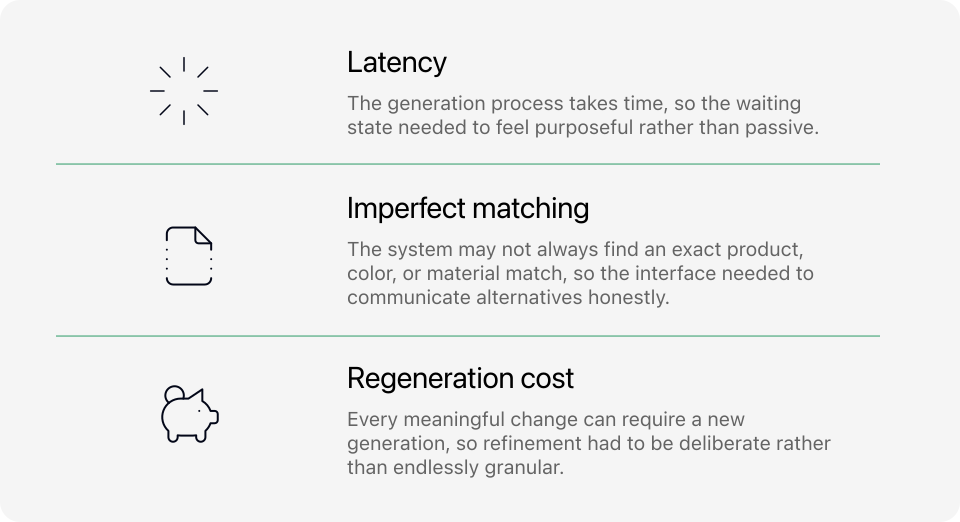
This introduced three important constraints:
Latency The generation process takes time, so the waiting state needed to feel purposeful rather than passive.
Imperfect matching The system may not always find an exact product, color, or material match, so the interface needed to communicate alternatives honestly.
Regeneration cost Every meaningful change can require a new generation, so refinement had to be deliberate rather than endlessly granular.
These constraints pushed the design away from open-ended editing and toward a more controlled interaction model. The system makes a strong first proposal, then gives users a small set of meaningful ways to explore variations.
Designing the Flow
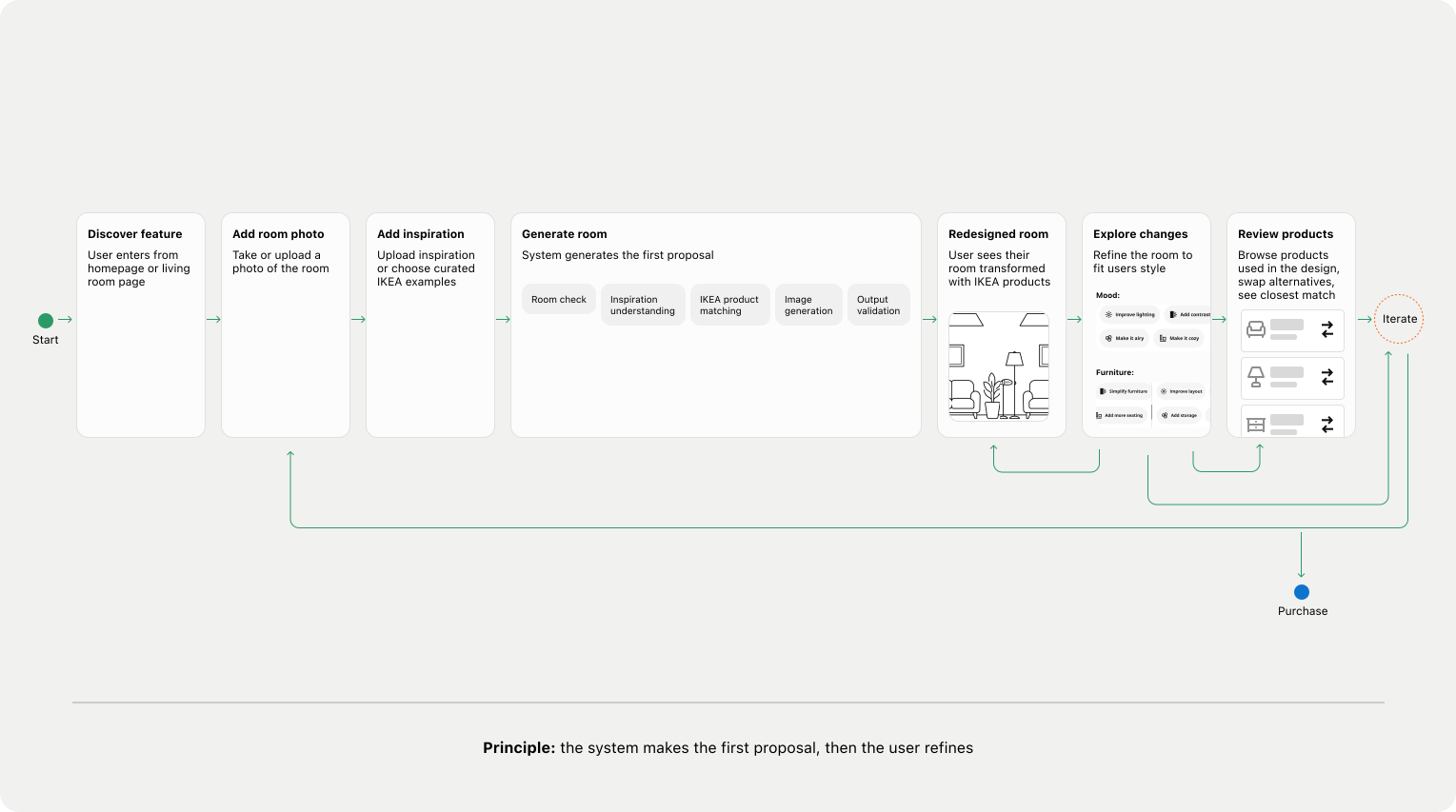
The final flow is intentionally simple: users add their room, add inspiration, wait through a clear generation process, then see their redesigned space before making any product decisions.
Rather than splitting the experience into multiple configuration steps, the intake is designed as one moment. The user provides two inputs on the same screen: a photo of their room and, optionally, an inspiration image. If they do not have inspiration ready, they can choose from curated IKEA examples.
From there, the system takes over. It interprets the room, translates the inspiration, matches IKEA products, and generates a complete furnished proposal.
The first output is always visual: the user sees their own room redesigned. Only after this moment do product details, swaps, and refinements appear.
The flow follows a clear sequence:
Add photos -> Generate proposal -> Explore changes -> Shop the room
This structure keeps the experience focused on the core promise: helping users move from inspiration to a confident, shoppable version of their own space.
I didn't hand this off as a spec. I built the front end myself - the real, production web experience, not a clickable prototype - so the interaction model would survive contact with actual latency, real product data, and IKEA's engineering standards. It went through engineering review as production code and shipped live.
From Inspiration to Commerce
A key part of the concept is that the generated room is not just an image - it is connected to real IKEA products.
After the room is generated, users can open the product list to see what was used in the design. From there, they can review items, swap alternatives, and move toward purchase.
This keeps the experience grounded in action. The AI output is not only inspirational; it becomes a bridge into the IKEA catalog.
Impact
Designed in collaboration with the IKEA AI Lab, this project is currently being developed into an MVP for testing within the IKEA app in selected markets. The work helped shape the product direction from an experimental AI concept into a clearer user experience: one that connects room inspiration, spatial visualization, IKEA product matching, and shopping into a single flow. Early customer research showed strong interest in AI-powered home design, with users responding positively to the ability to visualize their own spaces with affordable, shoppable furniture. The prototype also surfaced key user needs around architectural context, end-to-end integration, customizability, and confidence in design decisions. This was also the rare case study where I owned it past the handoff: I built the entire front-end web experience myself, and it was reviewed, approved by engineering, and shipped live - not a prototype sitting in a design file.
Other projects

TL;DR summary for IKEA AI Home Furnishing. Use the Summary button at the bottom of the page.